 |
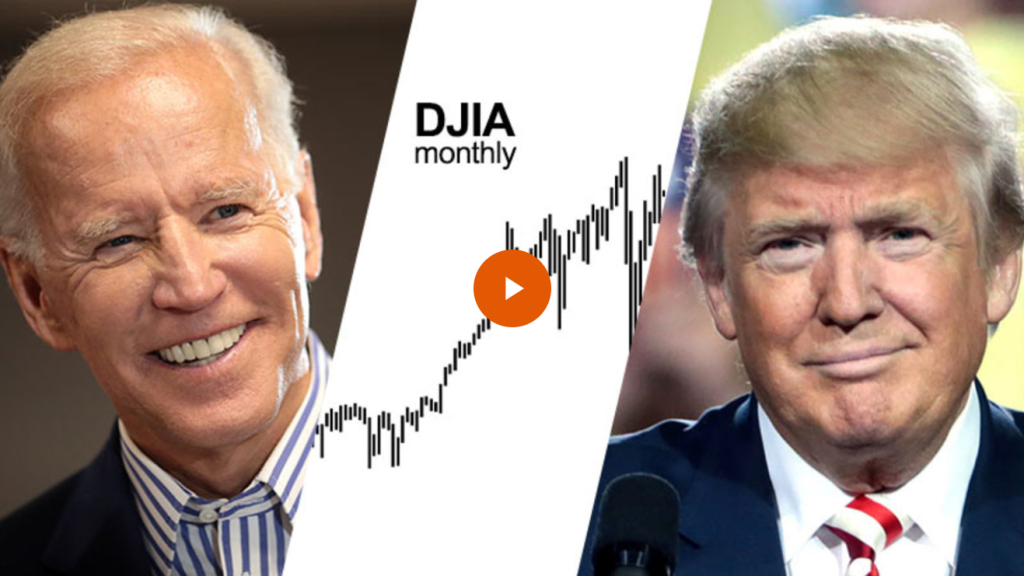
The U.S. presidential election is just days away. What does the stock market say about who is likely to win? Which party would be better for the stock market and the economy? And how can you anticipate trends in politics, the economy and broader society going forward, regardless of who wins? Get deeply researched answers… Read more Trump vs Biden |
Author: admin
Nobody is Selling Short – Is it a Top?
 |
Fear Grips Stock Market Short-Sellers — What to Make of It “This is easily the lowest wager against rising S&P rises” in the history of the data As you may know, short-selling a stock means that a speculator is betting that the price will go down. This is a lot riskier than taking a “long”… Read more Nobody is Selling Short – Is it a Top? |
Gold Fibonacci Retracement
 |
Gold: See What This Fibonacci Ratio Says About Trend A Fibonacci .618 retracement is a common reversal point in the markets Fibonacci numbers follow a sequence that begins with 0 and 1, and each subsequent number is the sum of the previous two (0, 1, 1, 2, 3, 5, 8, 13, 21, 34, and so… Read more Gold Fibonacci Retracement |
Put/Call Ratio at 20 Year Low
 |
This Stock Market Indicator Reaches “Lowest Level in Nearly 20 Years” Here’s what happened “the last time the 10-day put/call ratio made a lower extreme” After a big trend reversal, it’s not unusual for the correction to retrace much of the initial sell-off or rally. Thus, many investors are fooled into believing that the old… Read more Put/Call Ratio at 20 Year Low |
Extreme Bearish Sentiment in US Dollar
 |
U.S. Dollar: When Almost Everyone Is Bearish… By Elliott Wave International June started off with speculators decidedly negative toward the U.S. dollar. On the second day of the month, the Financial Times said: Wall Street strategists say dollar could be set for “dramatic” falls Elliott Wave International’s June 10 U.S. Short Term Update, a three-times-a-week… Read more Extreme Bearish Sentiment in US Dollar |
Japan Like Deflation in the United States
 |
The U.S. faces the prospect of a Japan-like deflation. Let’s begin with a brief review of Japan. Here’s a chart and commentary from the 2020 edition of Robert Prechter’s Conquer the Crash: Japan had one of the strongest economies in the entire world, growing at a 9% rate for 20 years up to 1973, and… Read more Japan Like Deflation in the United States |
Emerging Markets and Epidemics
 |
An Eye-Opening Perspective: Emerging Markets and Epidemics People across the entire planet remain very much aware of the COVID-19 health threat. The global disruption associated with the pandemic far surpasses other major health scares in modern history. Even so, you may recall 2009 news articles similar to this one from the New York Times (June… Read more Emerging Markets and Epidemics |
Why Non-Confirmations Matter
 |
When a trend is strong, related markets tend to move in unison. However, when a trend is near exhaustion — a bullish or bearish trend, “non-confirmations” often occur. A non-confirmation occurs when one market makes a new high (or low), but a related market does not. As cases in point, our November Global Market Perspective… Read more Why Non-Confirmations Matter |
Is Gold at a Top?
 |
Gold and Silver: Pay Attention to This Noteworthy Record High Here’s what usually occurs in related financial markets when “big changes in social mood are afoot” Related financial markets tend to move together. For example, gold and silver. Or, consider stocks. When the Dow Industrials are up on a given trading day, the NASDAQ is… Read more Is Gold at a Top? |
Deflation vs the FED
 |
Weeks before the February top in the DJIA, the January Elliott Wave Theorist (Elliott Wave International President Robert Prechter’s monthly publication about financial markets and social trends since 1979) said: Most economists believe the Fed can prevent financial crises and depressions. [EWI’s analysts] disagree. Socionomic theory proposes that naturally fluctuating waves of social mood regulate… Read more Deflation vs the FED |